Reflections Project Introduction
These Reflections were inspired by something I see every day but often take for granted: myself. I began each one by pondering what is valuable to me and what kind of person I am. Then, I transformed these ideas into pieces of art that are not only beautiful, but communicate a piece of my identity.
My Personal Mandalas
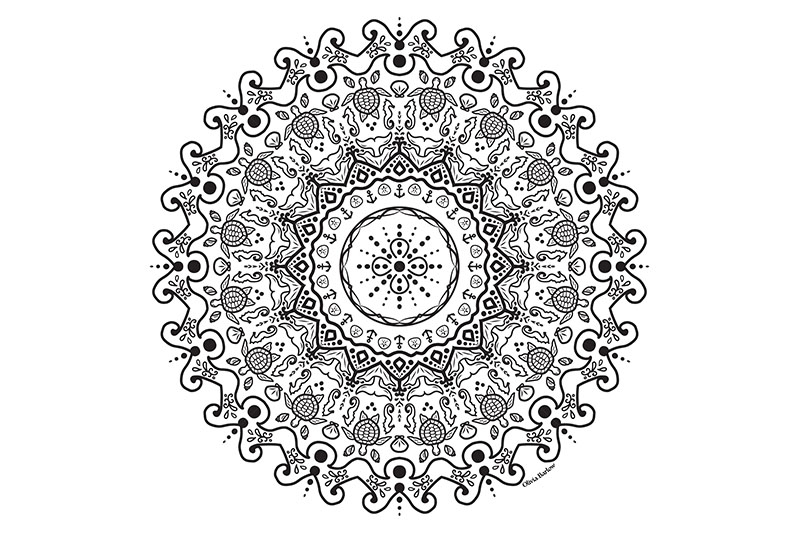
The first project in Digital Media this year was the Mandala Project. Beginning with Illustrator, I drew an black and white mandala with an ocean theme and titled it Among The Waves. That mandala became the base for the rest of the Mandala Project, which took about 2 months to complete in total.
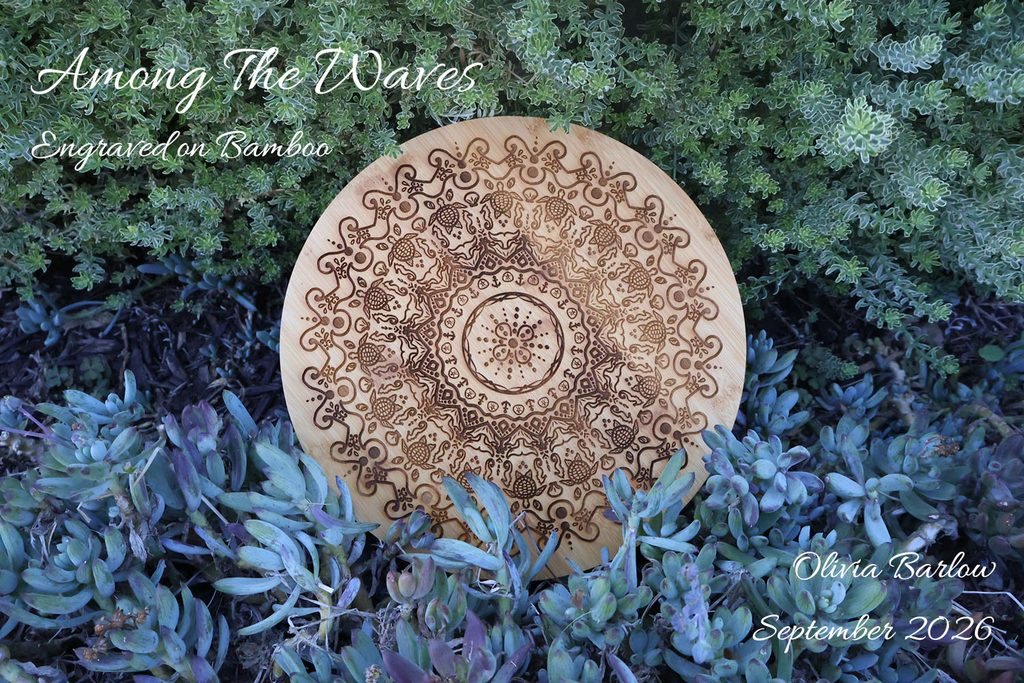
The black and white mandala I created used Illustrator’s reflecting effects and a clipping mask to create a clean boundary. It was made primarily with a reflecting pattern of 16 slices, but near the center I shifted to repetition in groups of 8 and 4. I used a variety of stroke widths and textures, and paid close attention to the spacing and cohesiveness of the piece.
From fun facts to fantasy, the ocean and the life in it have always captured my attention. This mandala was inspired by the ocean, a world that has come to represent my curiosity and appreciation of the world around me. I included many animals and symbols in this mandala, including the moon jellyfish at the center, along with patterns inspired by other marine animals.
Through this experience I became much more comfortable with drawing tablets and using layers in Illustrator to save different versions of my work. In the end, my favorite part of my mandala is the sea turtle, because it is one of the main items my eyes get drawn to, and it creates interesting negative space with the objects around it. I can now appreciate more simplicity in mandalas because I realize it helps to emphasize a few details instead of including so many that nothing in particular stands out.
If the images do not display below,
On a Mac, press Command + (plus) then press press Command – (minus)
On a PC, press the Ctrl + (plus) then press the Ctrl – (minus)
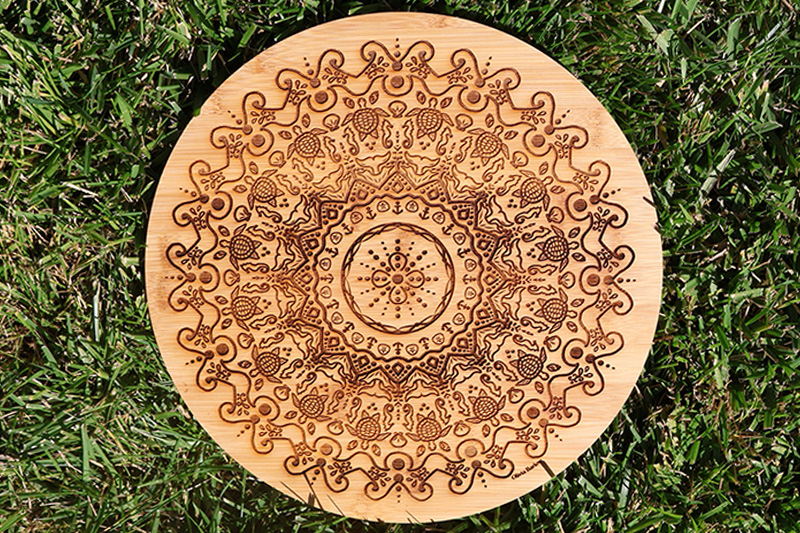
When I first saw my mandala engraved on bamboo, I recognized it immediately and I found it very satisfying to hold a physical representation of my artwork in my hands. The details from my online mandala are printed clearly, but the grain and coloring in the wood makes the design more subtle and adds an additional organic aspect to the piece. I chose bamboo as my material because bamboo grows in groups or families and a lot of my good memories of the ocean were made with my family.
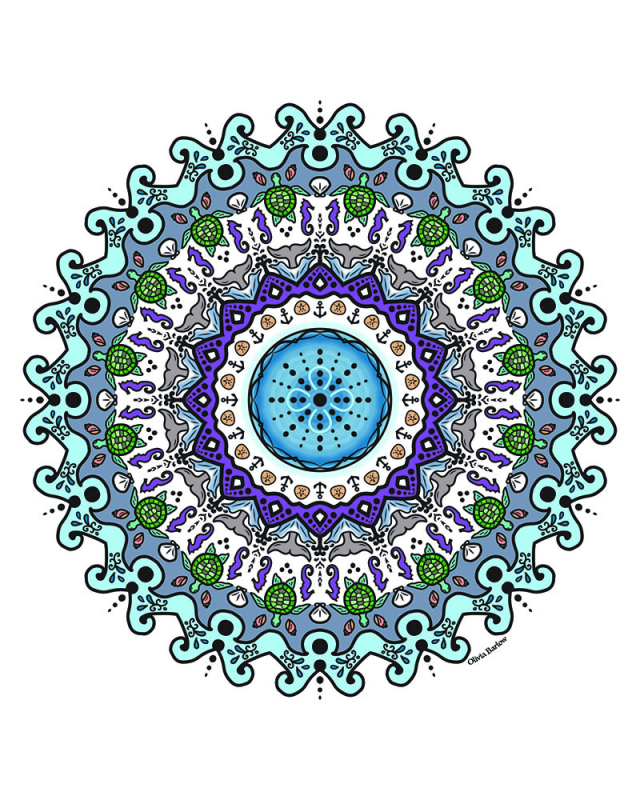
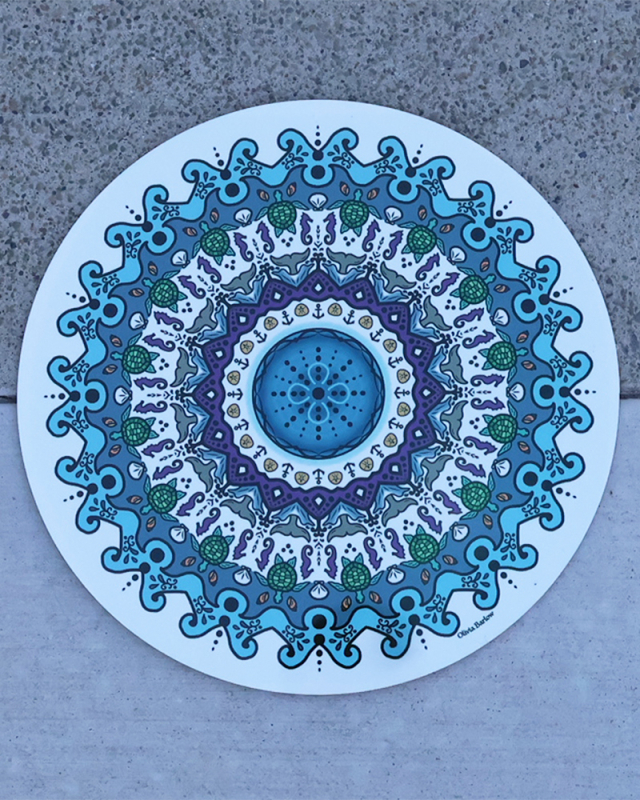
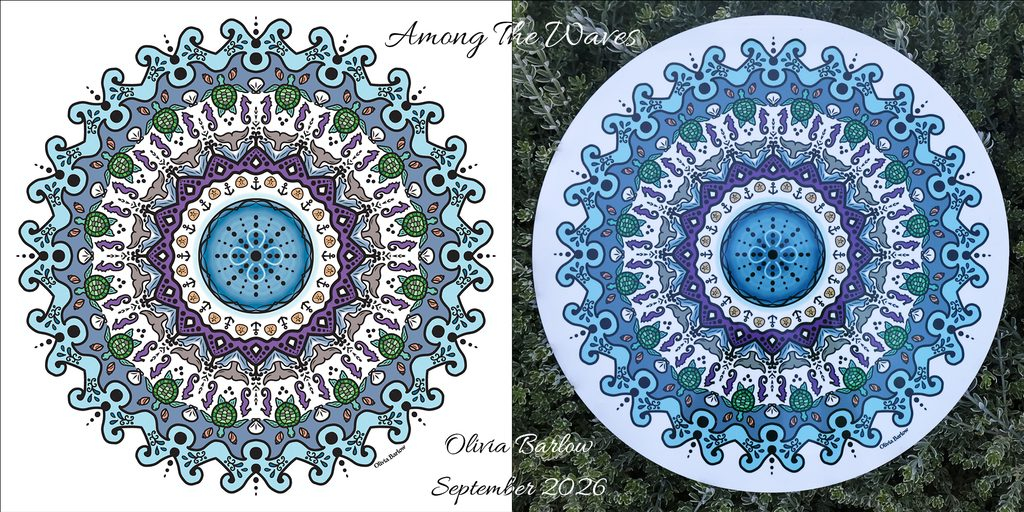
As I turned my black and white mandala into a colored mandala, I found that I was able to use color to create a sense of layers and depth in my mandala that was not possible before. When I saw the printed version of my colored mandala, I was delighted by the colors and appreciated the shine of the material. I chose colors of the ocean, including a purple found in seahorses and sea stars, to enhance and draw attention to the animals I had included. In working with color, I did not have to be as precise as when I drew individual strokes, so my method shifted to focus more on the balance and cohesiveness of the colors I used.
To me, what stands out most is the way the colors form visual rings that reinforce the symmetry of the mandala while also adding visual interest. I have found this element makes the mandala visually appealing both up close and from far away. That quality is one I admire in others’ art and I’m glad I was able to include that in my colored mandala.
I made my Mandala Build Reveal Video using After Effects, which required me to learn to navigate the interface, edit the length and speed of video clips, and apply a fading effect in time with the music. This video shows a small snippet of my process in creating the original black and white mandala, and includes a 100x-speed video of the engraving of the mandala as well.
Throughout this project, I learned the importance of details and repetition of shapes and colors in art. I am most proud of my original black and white mandala and how I was able to enhance it with each following iteration I created. In the future, I can remember this experience to help me to be detail-oriented and purposeful in my work because I know that it will be worth it. I can also better appreciate other artists’ attention to detail and use of repetition to create a more unified and complex piece of art.