Introduction
The conceptual unit allowed us to take risks and explore different productions in art, animation, poetry, music, and web productions. We were able to use all sorts of technology and professional equipment like DSLR cameras, Adobe Photoshop, Premiere Pro, Audition, WordPress, etc. This unit helped us communicate and express our unique opinions and aesthetics in unconventional and abstract ways.
Poetry
During the poetry unit, we were able to work with a local published poet, Christine Moore. She helped us explore and discuss different types of poetry, allowing us to develop our styles.
I started by writing down my thoughts and ideas in my notebook, which went from only a few keywords I knew I wanted to include to a full poem. I was then able to type it out, adjusting line breaks, capitalization, and punctuation. For the poem itself, I took inspiration from different Bible verses and Christian songs I know, notably the verse Psalm 148:7, 10-13, and the songs “Starling Assemblies” by Benjamin Torrens and “Christ Be Magnified” by Cody Carnes.
Reciting my poem gave me a bit of anxiety, mainly because the people who recited before me had poems I thought were incredible. I heavily enjoyed listening to everyone’s unique styles and analyzing their word choice and rhythm. I was okay with my own recitation, though I felt I could have been more creative in thinking about recitation while writing the poem.
Going into the poetry unit, I was nervous because I thought poetry was a uniform art that had to do with rhyme-schemes and syllables, which at the time didn’t have much meaning to me. While rhyming and syllables have their place in poetry, I realized that poetry is more than that, and in reality is an art to express yourself in a compressed, yet deep way. I found it very enjoyable to play around with words, the way they sound and the way they can mean multiple things at once, when I was done writing I would fall in love with my words, which I really appreciated about writing poetry.
the cry of creature
a sweet sound serenades me
as i go toward the fading light
calling out in the nightmy searching shifts to song
and i join the chorus of creationi think maybe
i’m crying out to Someone greater
and the created sing to this Creator
every creature echoing His eminenceecho
locating, and knowing that
Who i was looking for
was never far
after all
my pursuing was praising
My poem, “the cry of creature,” is a free verse poem about how creatures, even animals, sing praises to God, our creator. The speaker of the poem is a bat, a creature coming out at dusk to search for something. When the bat hears other creatures, humans, worshipping through song, it joins in, realizing that what it was searching for was really God.
As I opened the first stanza, I established the setting by using the alliterative phrase “sweet sound serenades,” repeating the “s” sound to describe the song the bat hears. The setting unfolds as the bat “goes toward the fading light,” an image of the setting sun; I used a rhyme of “light” and “night” to continue building on the idea of dusk.
The second stanza also opens with an alliteration, using the “s” sound to express how the bat’s echolocation becomes melodic. The second line in the second stanza also uses an alliteration with the “c” sound. This line shows that the bat is joining in the chorus that is already happening, for all creation brings praise to God.
The third stanza begins with an enjambment, allowing for a moment of reflection as the bat realizes it is calling out for a greater purpose. The capitalization of “Someone” shows how important God is, as well as the capitalization of “Creator,” “His,” and “Who” in the last stanza. A rhyme is made in the second and third lines of “Creator” and “greater,” both speaking of God. The last line in the third stanza uses yet another alliteration, this time with the “e” sound to enforce the idea of echoes and echolocation. The second and third stanza also use the poetic device of consonance, repeating the “creat-” sound in the words, “creation,” “created,” “Creator,” and “creature,” which is also reflected in the title of the poem, “the cry of creature.” This repetition of the sound emphasizes the concept of making something, and points the reader’s attention back to the maker.
The final stanza begins with the stand-alone word, “echo,” which is meant to “echo” the last line of the third stanza which has the same word in it. This enjambs the next line, which begins with the word “locating,” forming the word “echolocating” when placed together, a reference to bats. The words “and knowing that” are a contrast to the previous phrase, “i think maybe,” showing that the bat becomes more sure of what it is feeling and saying. The second to last line, “after all,” is meant to be ambiguous as to which line it is enjambed with, as it works with the line before it and the line after it. However, it keeps its same meaning, that the whole time, the bat’s “pursuing was praising,” even though it didn’t realize. This last line was also meant to be an alliteration with the “p” sound.
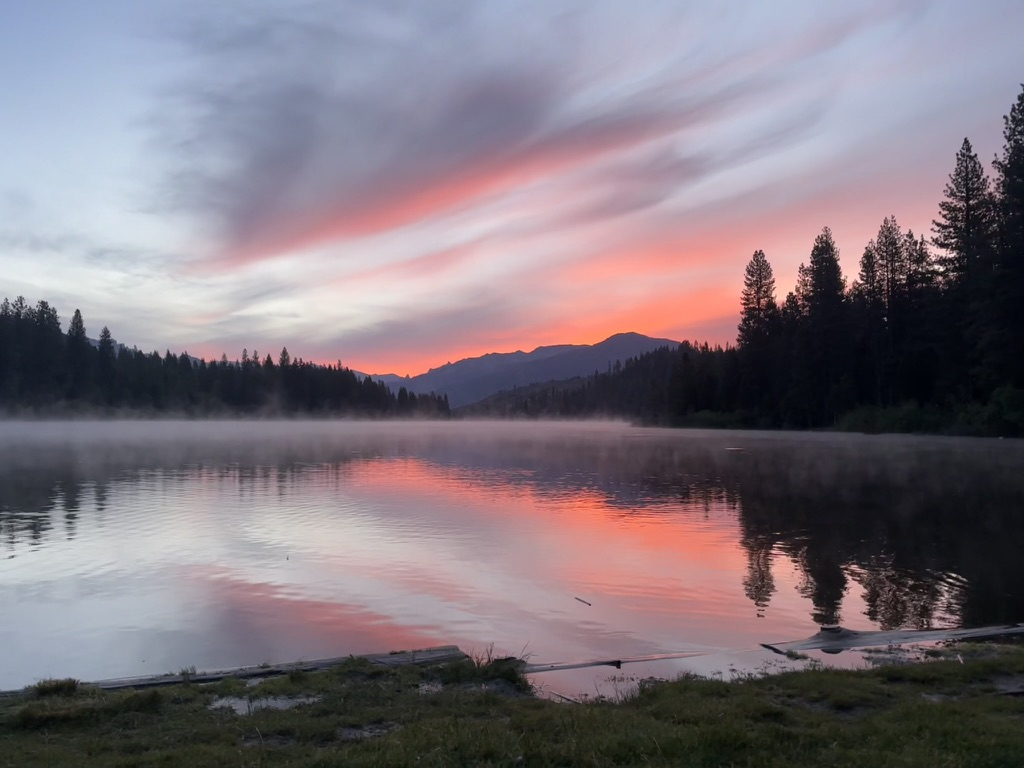
In this poem I used many alliterations, and occasional rhymes, to make the poem sound somewhat like a song, which is one of the themes in the poem. This poem was inspired by an experience I had, where I was with my friends worshipping at sunset, and bats fly by, making sounds that I interpreted as them singing along. It reminded me of a few verses in the Bible that mention that all creation, even animals, sing praises to God, particularly Psalm 148:7, 10-13. I was also inspired by “Starling Assemblies” by Benjamin Torrens, which is also a free verse poem and song, using the imagery of animals to point to a greater meaning. In short, I would like my reader to come away with a new desire to “join the chorus of creation,” or to reflect on what they are searching for and whether it is worth praising.