Tell A Lie – Apr 24

I think one of the things that can often be portrayed using a camera, that could never work in real life, is distorted proportions. This is why I wanted to make this photograph look as though my little brother was standing next to a massive soccer ball, or possibly this regular-sized soccer ball was next to my tiny brother. Either way, this is pretty obviously a “lie”, because they are both regular sized things. Distortion of proportions is a very interesting way to create perspective within photography.
Leading Lines in Food – Apr 17

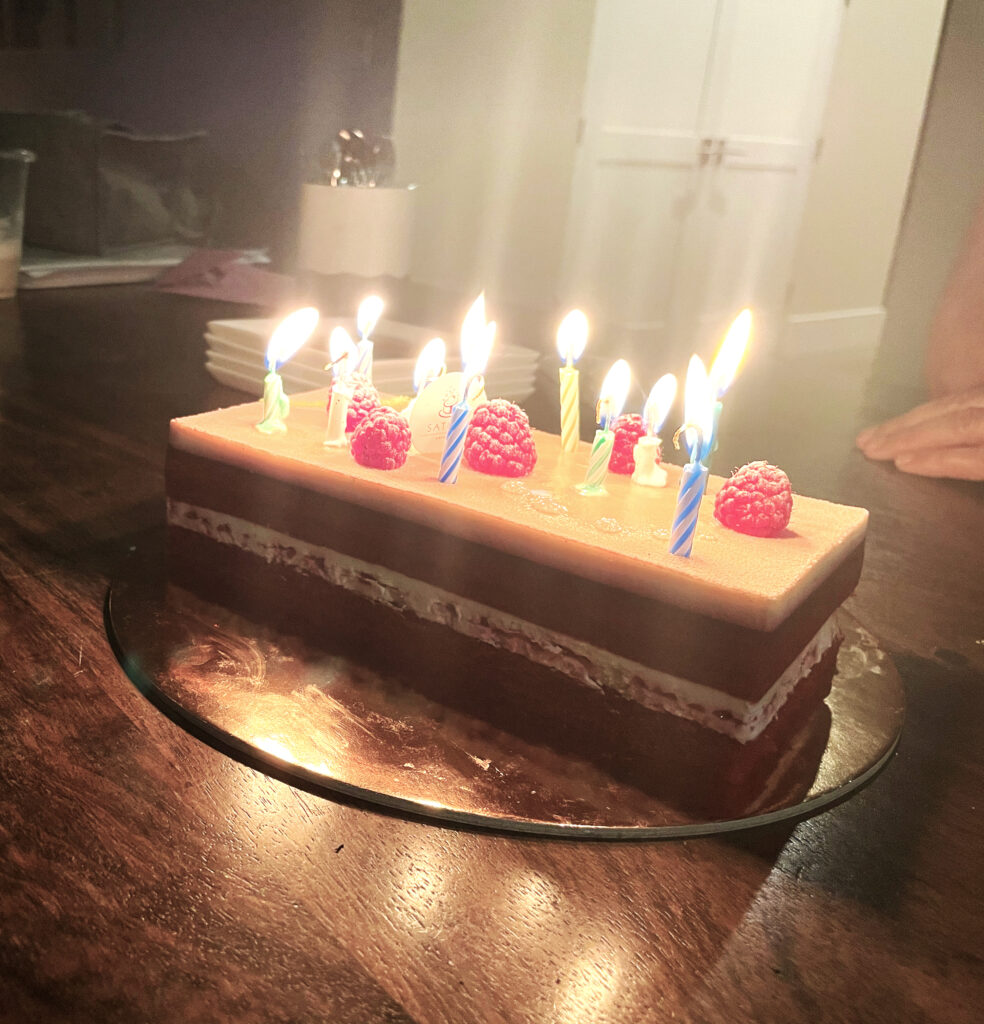
The first thing I thought about when I heard this prompt was spaghetti. However, my brother’s birthday was around this time, so when we were celebrating with a cake, I realized that the layers of the cake exhibited Leading Line as well. I think food photography is interesting because of all the variations of elements of art and principles of design that can be used. Texture is a very common principle that isn’t usually paid much attention to in other forms of photography, but in food, it is far more prominent – especially in close up photography. Food itself is such a unique art form, too, that food photography often can’t eclipse the entire masterpiece that is the dish.

Stranger – Apr 10

In this prompt, I wanted to tell the story of a stranger and his best friend. I really love the saying “man’s best friend”, because I think sometimes it can be so accurate it’s really uncanny. In my picture of a stranger in a kayak in Half Moon Bay, I really wanted to capture to loyalty of this dog, going as far as to run after his best friend even though he’s in the water. I really enjoyed taking this photograph, as I felt it perfectly encapsulated the story of this man and his dog.

Serenity – Mar 24

Before taking the photo for the prompt “serenity”, I wanted to be sure I had the correct definition for it. Serenity is defined as “the state of being calm, peaceful, untroubled”. I felt that this picture of some baby goats playing on a small stool embodied this definition very well. They all seem so happy and carefree. For the picture’s composition, I focused on centering the stool and having the subjects (the goats) revolve around it. I also tried to incorporate the rule of odds as well, so I picked a photo with three main subjects. When editing the photo, I also tried to make it brighter and more vibrant to continue the theme of serenity.

Rule of Odds – Mar 17

When I first found out about this prompt, I was very confused. In my head, I always thought that even numbers would be the most visually appealing, but after looking through volumes of photographs and paintings, I have agreed with whoever came up with this rule that odds are more visually appealing. In this photograph, I tried to have one main subject with two lesser subjects, keeping the main subjects at odd numbers, as well as the total. I think it is really interesting that a vast majority of people find odd numbers to be more visually appealing than evens.

Aging – Mar 10

The first idea that came to mind when I heard the prompt “aging” was the circle of life. I came to this goat farm to see it for myself, where I saw tons of baby goats, some as young as a day old, as well as older goats, like the one pictured. I used black and white on this photograph because I felt that it represented most people’s attitudes toward aging – most people try to avoid it and seem younger – but I think it’s just a natural process that is bound to happen. I chose this picture because I think its closed eyes really do well to represent that it is at peace with its life, which I hope everyone achieves at some point.

#NoFilter – Feb 17

I chose this photo for the No Filter prompt because I felt that, while almost every photograph looks better with some editing, this one really symbolized and represented the problems with photos before editing. There are some minor issues with the contrast and overall exposure – if I were to edit it I would try to make the main subject (the dog) less bright, and increase contrast and vibrance in the background. I think the No Filter prompt is very important in showing the audience that photographs are basically never perfect right away – they require some work before they are ready to be published.

Negative Space – Feb 10

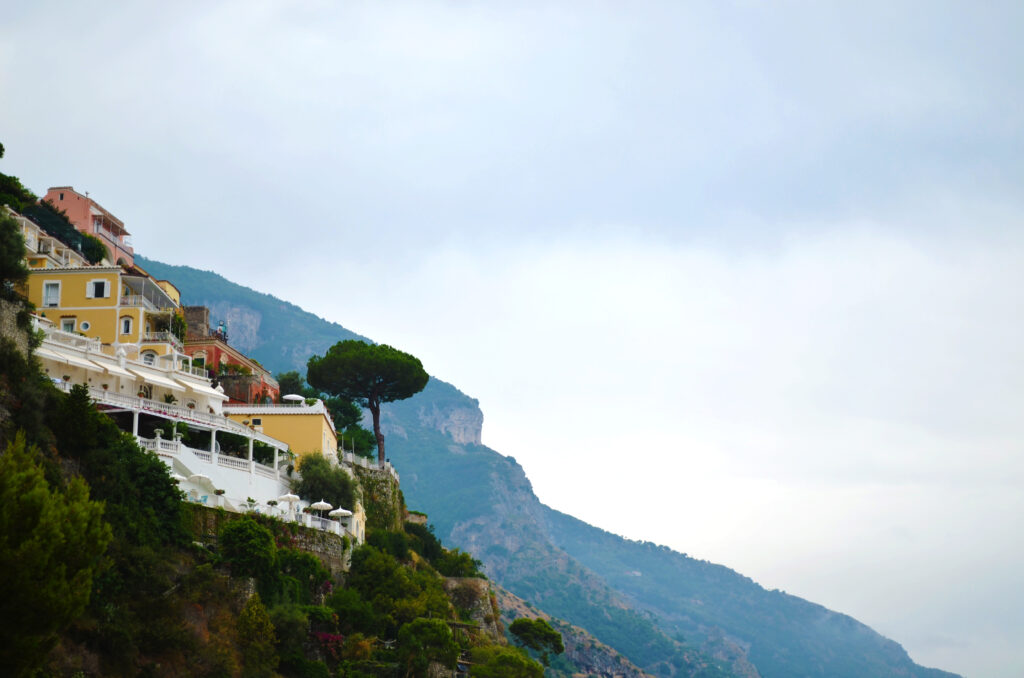
When I think about types of photos with negative space, I often think first about landscape and architecture photos, with the subject clearly bordering the negative space. So, I used this concept in this week’s photo, which is a landscape of a large mountain contrasted with a cloudy sky, which represents the negative space in the photograph. I think negative space is a great tool for artists to use to affect perspective and contrast, especially when considering the value of the negative space, and how it can be used to change how the subject actually looks. I really liked the way I cropped the photo as well, to be split diagonally across the frame by the negative/positive space border.

Shadow – Feb 3

When I heard the first prompt for this month would be “shadow”, I wanted to work with how shadows made effects and textures on different surfaces. So, I went to a forest area with lots of trees that let some light in, but not too much. After walking around for around ten minutes, I found a spot that I thought highlighted different values of shadow and light and took pictures in this spot. In my photo, the different lights are shown in the subject’s hair and face, with two large shadows and some light in between. In addition, I contrasted the shadowy foreground with a brighter background because I wanted to put more emphasis on the shadow.

Center Frame Portrait – Jan 20

Framing the subject of the photo is often something that is taught to be not very good, as the rule of thirds is the most common form of framing. However, centered subjects give off a calming, tranquil energy, one that I used and captured in my photograph. The delicate water droplets hanging on the leaf represent the peace I get during storms or rainy days. For the rest of the composition, I obviously could not use rule of thirds, so I incorporated shape and repetition by including the other leaves and water drops as well.