Introduction
This Documentary Unit asked one central question: “How do you creatively and truthfully portray a significant person, group, place, idea, or issue in the community?”
Across English, Digital Media, and Film, the Documentary unit challenged me to move from storytelling into journalism — combining research, interviewing, and creative nonfiction to develop a distinct perspective on a real subject. In English, I honed expository writing skills and learned how to balance narrative with research in documentary-style prose. In Digital Media, I used InDesign, Photoshop, and Illustrator to produce print publications including a flyer, trifold brochure, and magazine article layout. In Film, I worked toward producing an 8–10 minute documentary using Premiere Pro, developing more advanced cinematic techniques and learning how to frame a personal subject within a broader social or political context.
English & Digital Media Class Production
In English, the documentary process began with pitching and developing an article idea, grounding it in both primary and secondary research. From there, the process followed the full arc of journalistic writing — researching the subject, conducting interviews, drafting, workshopping, and revising toward a final published piece. The focus was on narrative-style journalism: writing that informs but also engages, using creative nonfiction techniques to bring the subject to life for a reader.
What I did my Documentary Article on
My documentary article, “Saved from the Scrap Heap: The Mannequin’s Second Life in the Studio,” explores what happens to mannequins after the retail industry is done with them — and the surprising community of artists and entrepreneurs who give them a second life. The piece started close to home: growing up, I always knew my family friend Jay as the person with a house full of mannequins. What seemed quirky and fun turned out to be part of something much bigger. That personal connection became the entry point into a wider investigation — tracing the mannequin from the shop floor to the landfill to the art studio, and speaking with people like Judi Henderson-Townsend of Mannequin Madness and Jay herself to understand what draws people to these discarded forms. The article weaves together environmental research, art history, and personal interviews to argue that the mannequin is more than a retail prop — it’s a lens for looking at waste, identity, and what we choose to throw away.


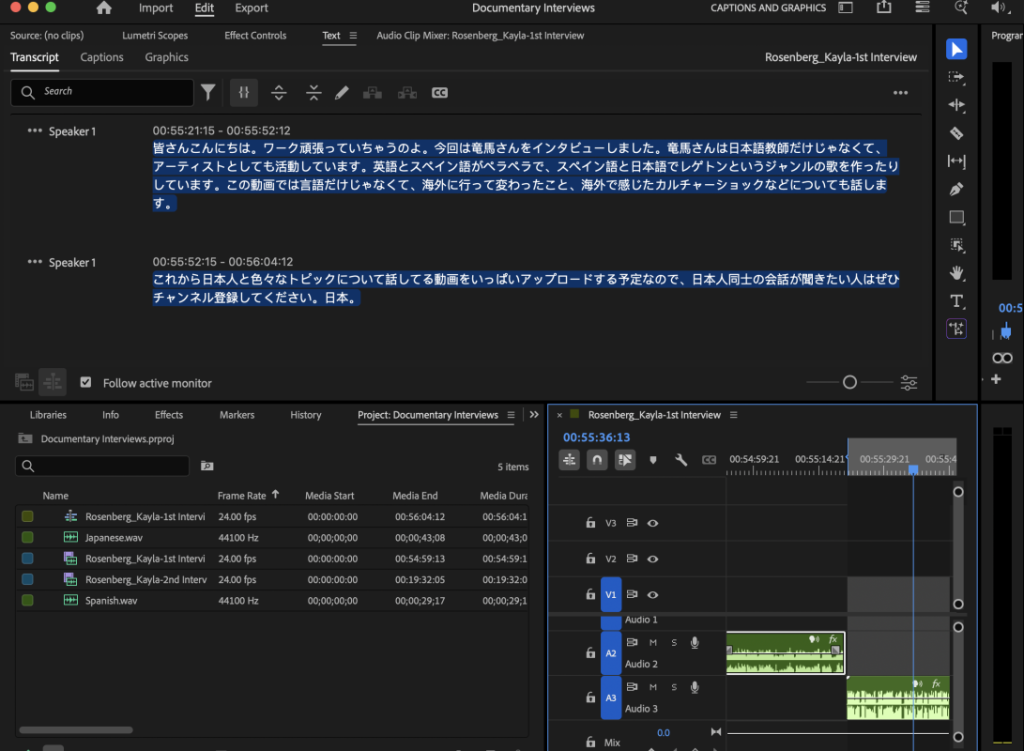
In Digital Media, that written work was taken a step further — I used Adobe InDesign alongside Photoshop and Illustrator to design and lay out the article as an actual magazine page. This meant thinking about typography, image placement, hierarchy, and visual flow, translating the written content into a polished print publication. The two classes worked hand in hand, with the writing and the design informing each other throughout the process.

Elective Class Production
Before diving into our full documentary productions, our film class made a mockumentary as an introduction to the technical and stylistic side of documentary filmmaking. The subject? A classmate who kept bringing increasingly random things to class. The mockumentary format gave us a low-stakes, fun way to learn the real craft — shooting talking head interviews, building a narrative arc around a “subject,” and practicing the visual language of documentary film. We all got to do some acting, and even got our film teacher to sit down for a fake interview, which made it feel surprisingly legit. It was a great way to understand how documentaries are constructed before we had to apply those same techniques seriously.
Mockumentary:
Documentary
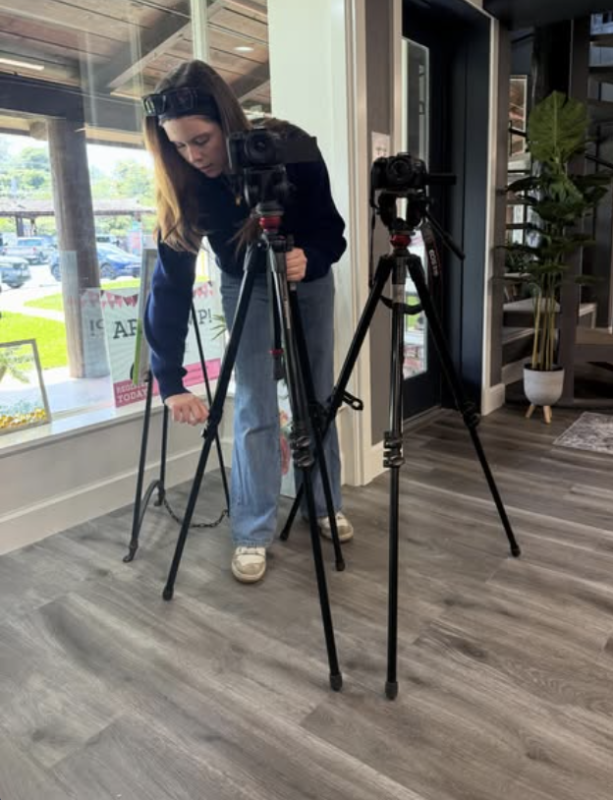
For our documentary film, my partner Ashley and I produced an 8–10 minute documentary on Los Altos Wine and Design Studio — exploring who they are, what they do, and what makes them a noteworthy part of the local community. The film gave us the opportunity to put everything we had learned about cinematic storytelling, interviewing, and documentary structure into a real production, capturing the studio’s story through interviews, b-roll, and thoughtful editing in Premiere Pro.

Documentary Film: Wine & Design
Interviewee Bios
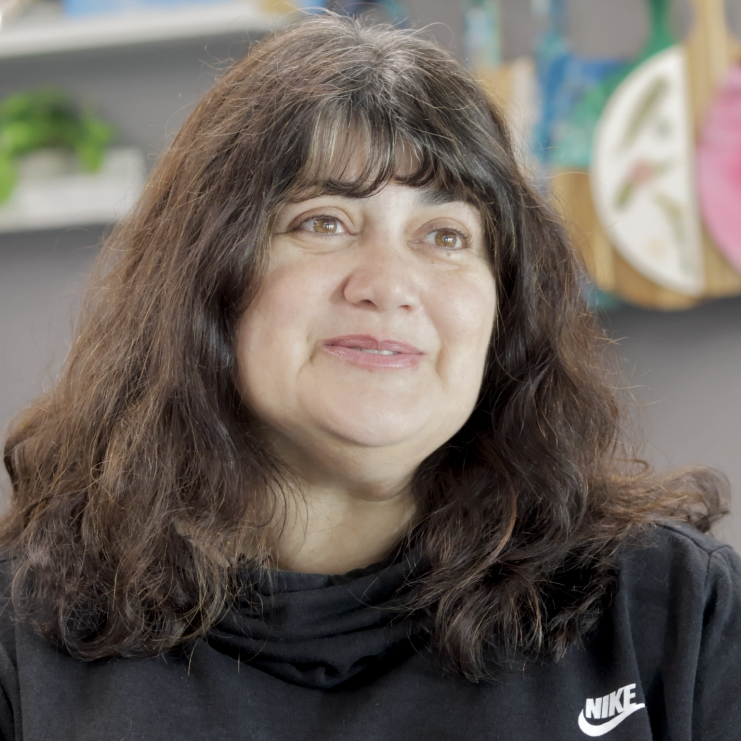
Co-Owner, Wine & Design Los Altos Inspired by a vision she first discovered on Shark Tank, Arezou Bahman co-founded the Los Altos location of Wine & Design to bring a dedicated space for accessible, community-focused art to the Bay Area. Committed to breaking down the barrier of the “intimidating canvas,” Arezou champions an inclusive environment where artistic perfection takes a backseat to creative exploration, mental relaxation, and pure positivity. Under her leadership, the studio has grown into a premier regional destination for milestones, celebrations, and collaborative gatherings.
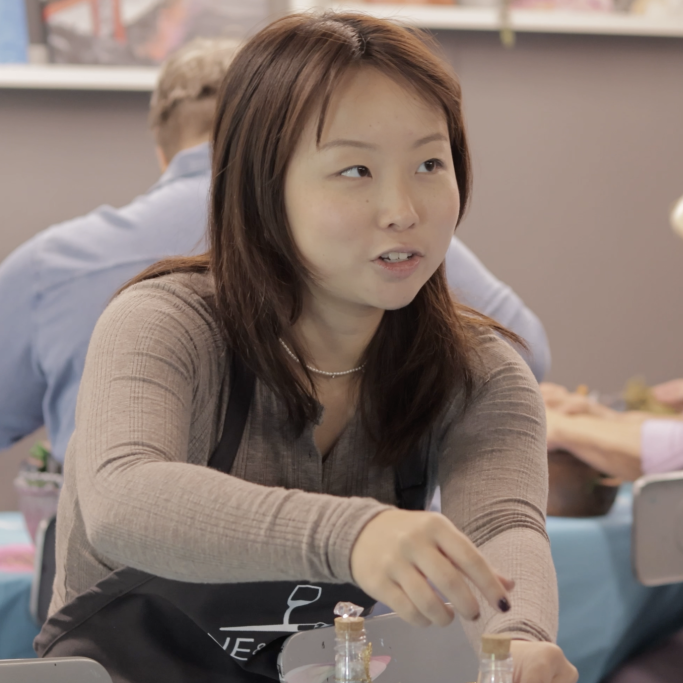
Employee, Wine & Design Los Altos As a co-owner of Wine & Design Los Altos, Jane Eo oversees the studio’s diverse programming, with a specialized focus on community outreach and youth engagement. She spearheads the studio’s ArtBuzz Kids division, establishing vital creative partnerships with local elementary schools and creating structured, imaginative spaces for children during summer camps, holiday breaks, and after-school programs. Jane is dedicated to cultivating a welcoming environment where both children and adults can discover a renewed pride in their own creative capabilities.

(A freestyle student too!) Studio Assistant: Having been with Wine & Design Los Altos since the age of 11, Ayanna Desai brings years of hands-on experience to her role as a studio assistant and youth art instructor. Ayanna guides students through after-school programs and summer camps, focusing on fostering confidence alongside foundational skills. Her work with diverse age groups has shaped her belief that artistic expression is accessible to everyone, and she finds her greatest reward in helping visitors discover a renewed pride in what they can create.
Reflections & Acknowledgements
Reflections
The Documentary unit was probably the most challenging project I’ve worked on at Freestyle — and also the one I’m most proud of. The English and Digital Media side of it was a grind. With under a month left of school, I was told my article wasn’t coming together and had to start over almost entirely — redoing my research, restructuring my argument, and rewriting from scratch under real time pressure. It was frustrating, but pushing through it produced something I genuinely stand behind. Once the writing was finally where it needed to be, getting to design it in Digital Media as an actual magazine layout in InDesign made all that effort feel worth it. Seeing the article become a real, designed publication was one of the most satisfying moments of the year.
Film had its own curveball — our original documentary subject bailed on us, and for a moment it felt like the whole project was falling apart. But with Ayanna’s help, Ashley and I found a new subject in Los Altos Wine and Design Studio, and the documentary we ended up making was something we could be genuinely proud of. Learning the technical craft of documentary filmmaking — the cinematography, the interviewing, the editing — was rewarding in a way that stuck with me.
Acknowledgments
Thank you to my mom, Talila Baron and Mr. Greco for their support with my magazine article. It was a difficult process, and both of them pushed me to keep going when I was ready to give up — I wouldn’t have produced something I’m proud of without them. Thank you to Ayanna for stepping in when our documentary film plan fell through and pointing Ashley and me toward Wine and Design Studio — it made all the difference.