
Introduction
During our first official unit here at Freestyle, I learned how to use a variety of mediums to get across my creative message. Some of these tools included art, animation, web production. photography, and more. I got to use high grade equipment such as a DSLR Camera, a Tascam Audio Recorder, WordPress, and a variety of apps from the Adobe Suite.
This unit taught me the importance of stepping out of my comfort zone. For example, I had never tried photography before taking Digital Media, so figuring out manual camera settings was completely new to me. However, I am incredibly happy to be trying out and learning new skills that I will be applying throughout the year even beyond this unit. Overall, I think the Conceptual unit was a fantastic start to a wonderful year here at Freestyle.
Art reflection
One of the first things I ever did here at Freestyle was go on a field trip to the San Fransisco Museum of Modern Art. This field trip was essentially our first dip into exploring different creative works and then working to extract what these works inspired in us. This project required us both to write a concise but descriptive text in English, then go to Digital Media and use said text as a voiceover for a video we’d produce in Adobe Premiere Pro. This project challenged me both in the aspect of condensing my thoughts (something I already struggle with) and through the fact I was creating through a new program (Adobe Premiere Pro). Though I have made videos for years, trying out Premiere was a completely new experience for me and provided a challenge I wasn’t expecting, but was greatly rewarded by.
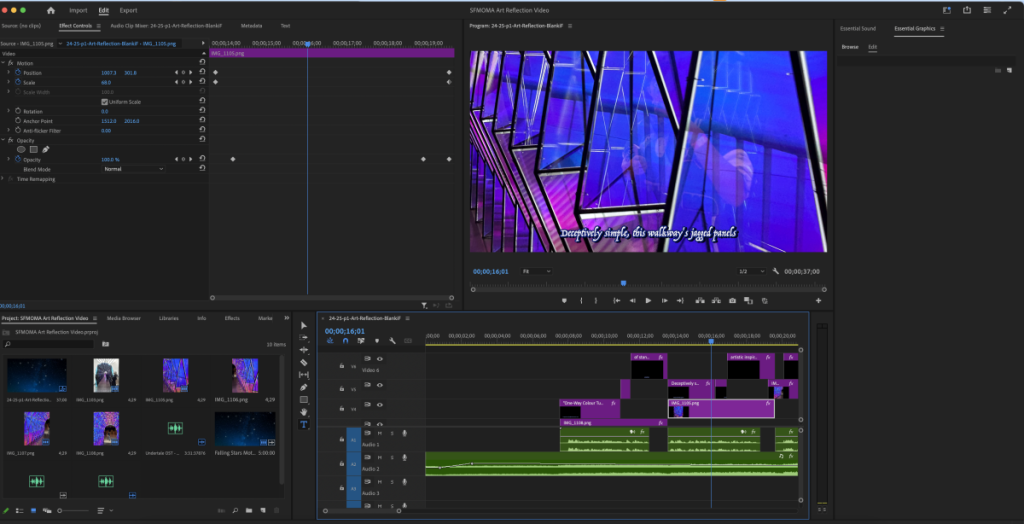
What I valued about this project is that it gave me new ways to express myself and overall challenged me to do things I wouldn’t usually do. It taught me an entirely new program and helped me practice something I’m already quite weak at. The Premiere skills especially will be something I will be using even outside of class now that I have it under my belt. The actual text writing in English also taught me how to condense deeper ideas, which is a skill I’m already trying to hone and work on as someone who overwrites most of the time. Overall, I’d say the SFMOMA Art Reflection video was an excellent introduction to the type of work I’d be doing here at Freestyle.
Parody Introduction
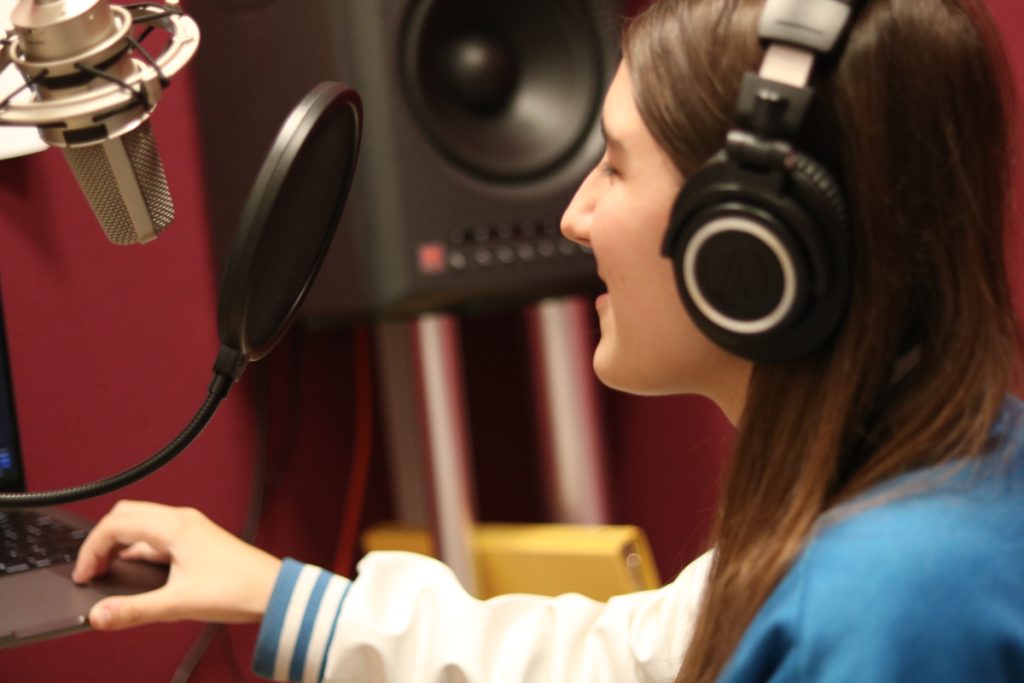
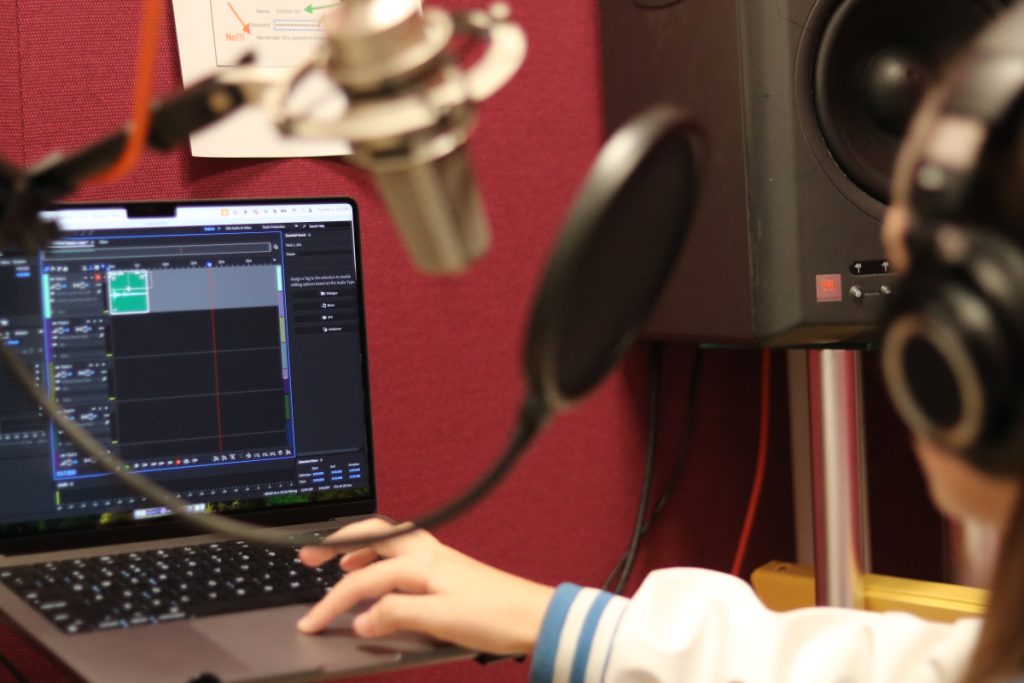
Our next project was to create a Parody Song. The process I went through to make my parody song was through experimenting with different audio adjustments and settings, figuring out the basics of Adobe Audition, and creatively writing new lyrics for my parody. Additionally, I had to learn how to mix and process audio, along with learning how to record audio in a more professional setting with professional equipment.
The message behind this project was the comical but also true desire of slacking off on work or on an assignment. In high school especially, the tendency to put work aside for later is extremely prevalent. The song, Animal I Have Become, is a song I have listened to when I wanted to exert such frustrations in myself, so it felt fitting to riff off it for this project. I grew artistically and technically with this project by learning about various ways to use audio to tell a story. I learned about how using audio tools like Adobe Audition can not only enhance my creative projects but also open a path to new potential projects I might pursue in the future. The main struggles I encountered throughout this project was mixing. Though I’ve messed with audio software before, mixing and mastering is an area of great weakness for me. However, this project not only helped me practice, but helped clarify areas of discomfort I had in the practice. Learning to normalize and compress audio, for example, was extremely helpful for me. If I could change anything, I’d add more to my project.
There are moments I wish I could’ve added more lyrics or more personal spins to make the parody more of my own, but chose not to in order to have it completed on time. The thing I’m most proud of with this project is the end section with the audio effects. I thought it was a cute touch that helped tie everything together and also added to the comical aspects of the song. The ideas I learned on this project will be useful for any music production or sound production projects I have in the future. Given I’m in animation, it will become incredibly useful once we start intermixing our work with audio and I will not need extra support in those areas with this project’s help. This project changed the way I see and appreciate other people’s art because it inherently made me reflect and appreciate the art of inspiration and parody. For a lot of people, parody projects are viewed as stupid or even unoriginal, but it takes a lot to not only do a new spin on a project, but to also do it well. I will not take what I’ve learned from this for granted and will use it with me throughout my years at Freestyle and even beyond.
Parody Lyrics
I can’t escape the bell
The assignments due tonight…
So I’m stuck studying till the light…
Somebody get me through this nightmare
I can’t focus, send help!
So now you can see, my concentration flee
No one will ever change the procrastinator I have become
Help me believe, that my grade won’t be a C
Somebody get me an extension or well!
(My grade is doomed, I’ll fail this too)

Animation
My experience in Animation so far has been wonderful. I’ve grown a lot by branching out and trying new ways to produce in a medium I already adore. I’ve always loved animation since I was a child, so taking this elective was a perfect choice for me. My teacher and classmates are all incredibly helpful and their feedback has helped me grow and achieve more than I initially thought. Originally when I signed up, I thought learning how to animate traditionally for example would be a harsh hurdle, but with the support and encouragement I’ve been given I’ve been able to do things I once thought were near impossible. This class has also made me realize my inherent passion even more, and reaffirms my love for it trifold.
The thing I value about being an Animation student is watching ideas from people all across my class turn into a reality. Animation is an already creative and subversive medium and allows people to tell stories in ways that would otherwise be impossible in the real world or even in more abstract forms of creation. Seeing other people around me pursue their individual artistic vision and passions is what inspires me to continue to do mine. For a long time, I held the belief I should hold in my ideas or passions because I thought nobody would understand or give them a chance, but this class has taught me otherwise.
History of Animation
Praxinoscope and Zoetrope
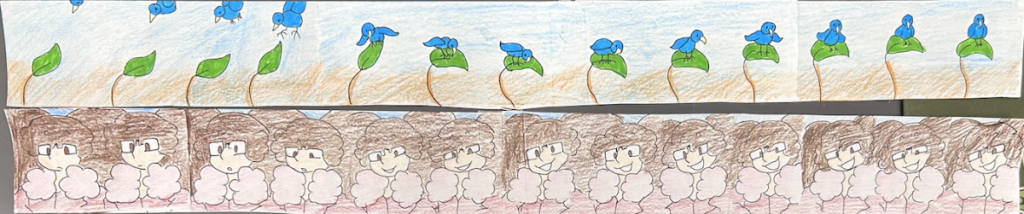
Our first real official project in animation was making our Praxinoscope and Zoetrope animations. Essentially, we created 2 strips that’d total to 12 frames that then would be spun in a circular motion inside a device with a mirror inside. This would display the frames moving thus making it look animated. Praxinoscopes and Zoetropes are one of the oldest devices used for animation, so it made sense we were starting with the basics. We used a lightboard in order to trace over our frames on paper and keep them consistent as we were animating.
Phenakistoscope Wheel

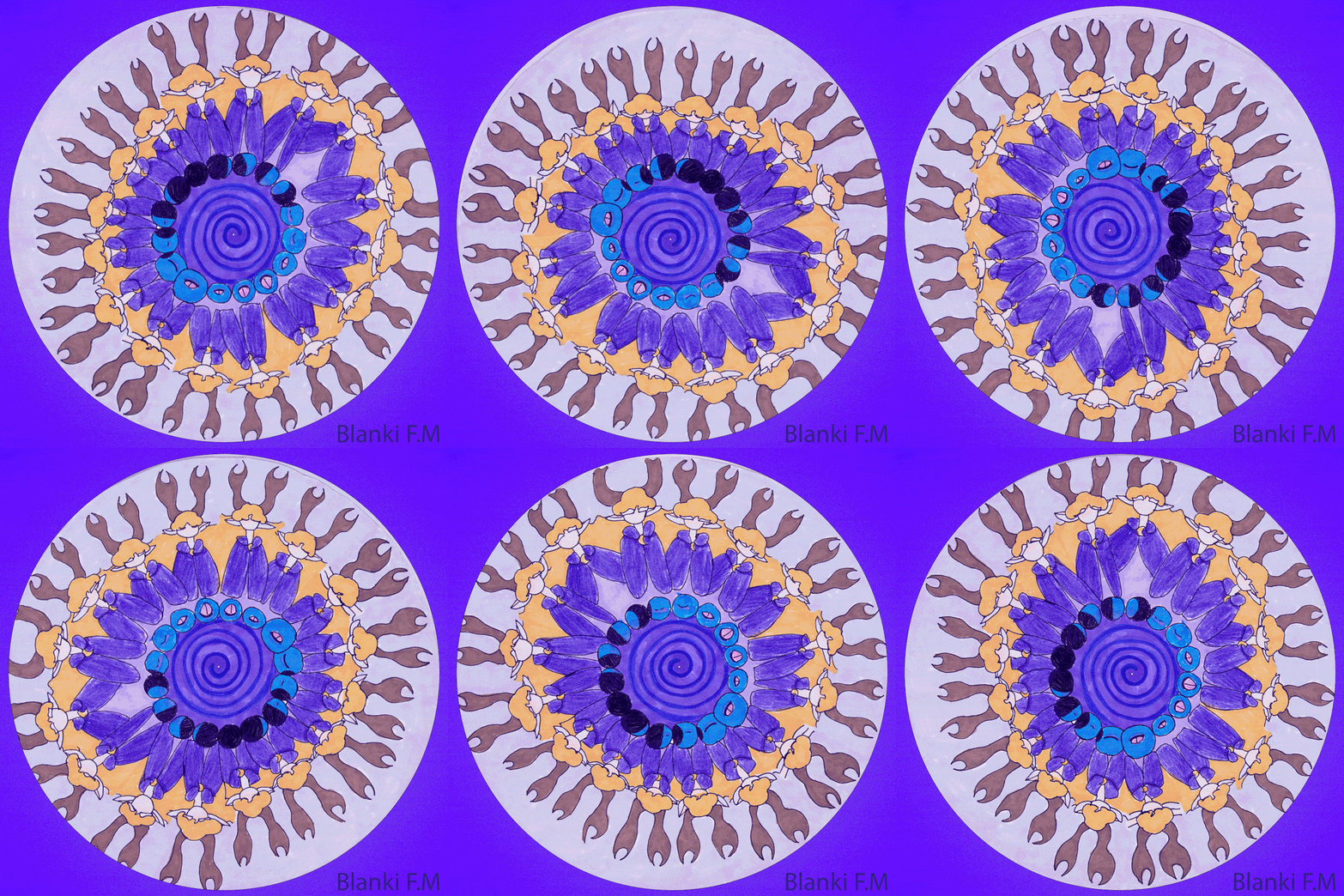
Our project after our Praxinoscope and Zoetrope animations was to make a Phenakistoscope Wheel. A Phenakisticope is another antique method of animating that uses a circular shape with multiple frames drawn across it spun in a mirror to give the illusion of movement
My phenakistoscope wheel was an immense subject of growth for me in animation class. Being our first real project that weren’t on small strips of paper, creating my phenakistoscope wheel really made me appreciate traditional animation more than I already do. Trying to make sure the motion was accurate only using simple spinning and a lightbox really tested me.
I am most proud of my ability to not only complete it but to have learned so much from the hands-on experience. This project not only re-affirmed my interest in the medium animation, but it helped grow an even bigger appreciation for the work that goes into producing it. This project helped me understand the work even the smallest of productions go through just to make something as beautiful as they do.