At the climax of a student’s time at Freestyle is Zenith (at least for Design). We get to challenge ourselves to learn something new, to increase our arsenal. To be our most passionate. Ms. Parkinson likes to say that design is everything, and so for our Zenith project, we were allowed to design anything we wanted.
I chose a watch dial, as they’ve fascinated me for many years. With Ms. P’s guidance, I opted for a skeleton watch: one where you can see through to the gears.
Inspiration & Preparation
I started with a moodboard, gathering my inspiration. I collected material ideas in addition to reference images of existing cool watch designs. Watches are really cool because their dials can be so versatile, and due to their status as luxury goods, they are designed to look pretty and expensive. I looked for dials that had aesthetic interplay between the decorative and functional pieces.
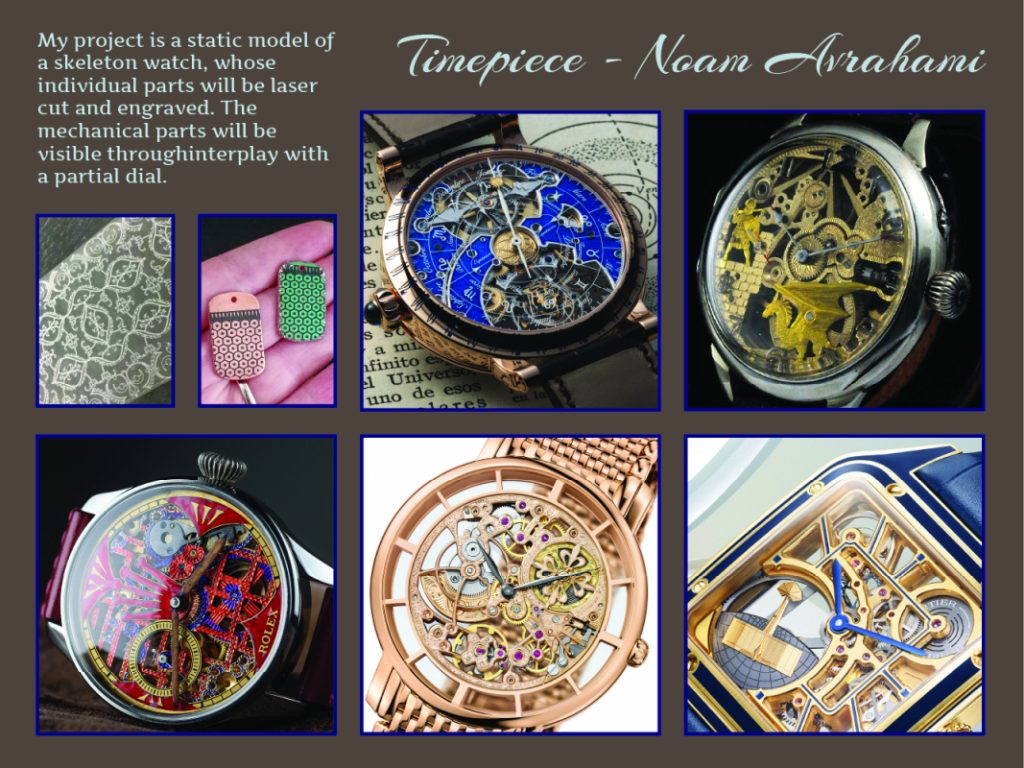
My model was always going to be static, so I took the opportunity to think about interesting designs that could have a theme and have parts that might not always be mechanically optimal. My final design was of a ship, with a spring in the sun and motion visible around the waves.
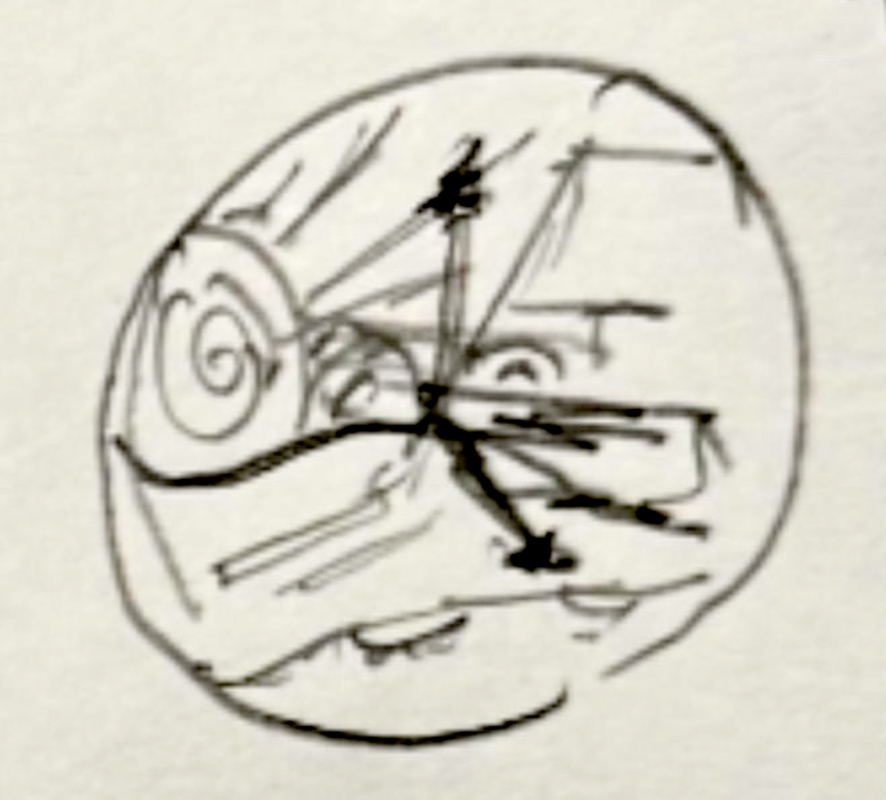
Designing the Parts
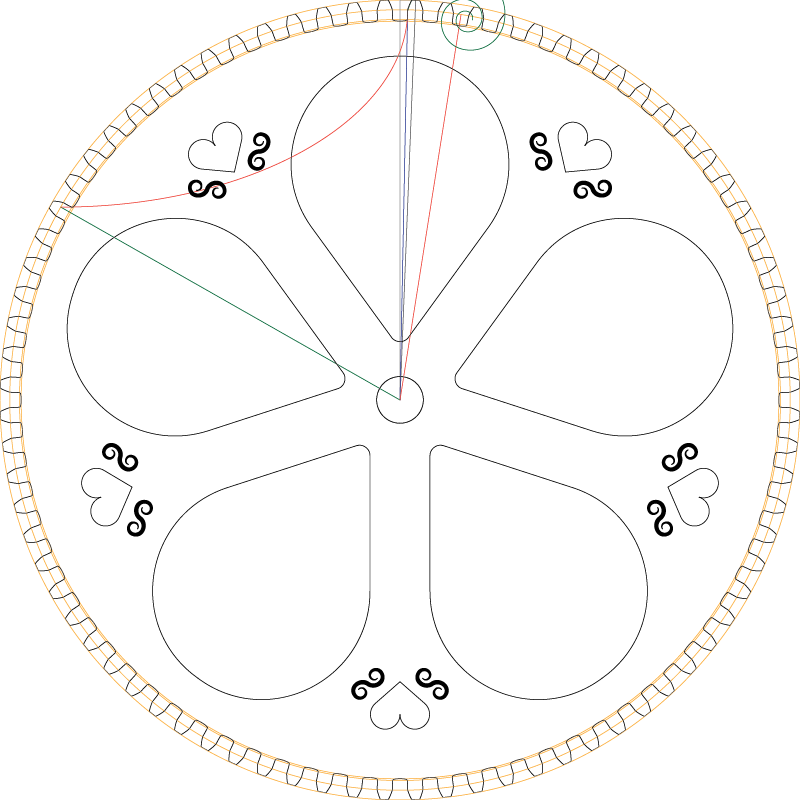
Next, I learned a lot about the parts of a mechanical watch, and the design of gears. I used a lot of math to try and get it fairly accurate, even if it wouldn’t have the mechanical efficiency of an actual watch. I expanded on what I learned making the mandala for Digital Media earlier in the year, but had to expand and join segments to make sure it would cut correctly for my physical product.
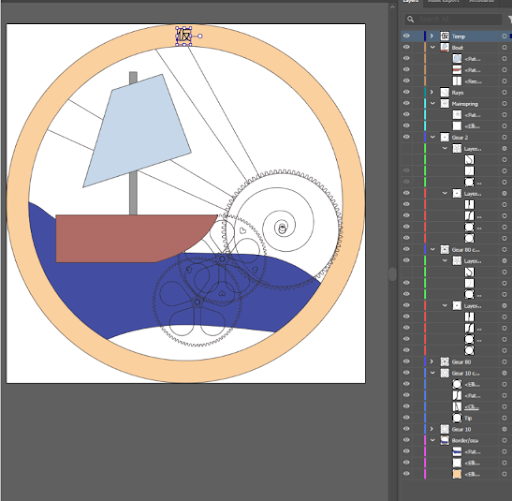
I was also testing out a layout in order to make sure that all the gears’ centers would align under the front. I did not want to make axles, so I needed to make sure it would line up and cover up glue properly. In this screenshot, I had the design of the ship backwards. This also offers a window into all the layers and organization I had for the project in Illustrator.
Digital Completion
After finishing all the gears and mechanical parts, I prepared my final assembly layout for how it should look. I aligned the gears with the rest of the dial one final time, and separated all the parts of the frame. You can see there are more large solid parts of color, which is to cover up the fact that there are some gears missing. I think it assists the composition anyways. This digital version is a sort of final product in addition to the physical one.

Cutting and Assembling
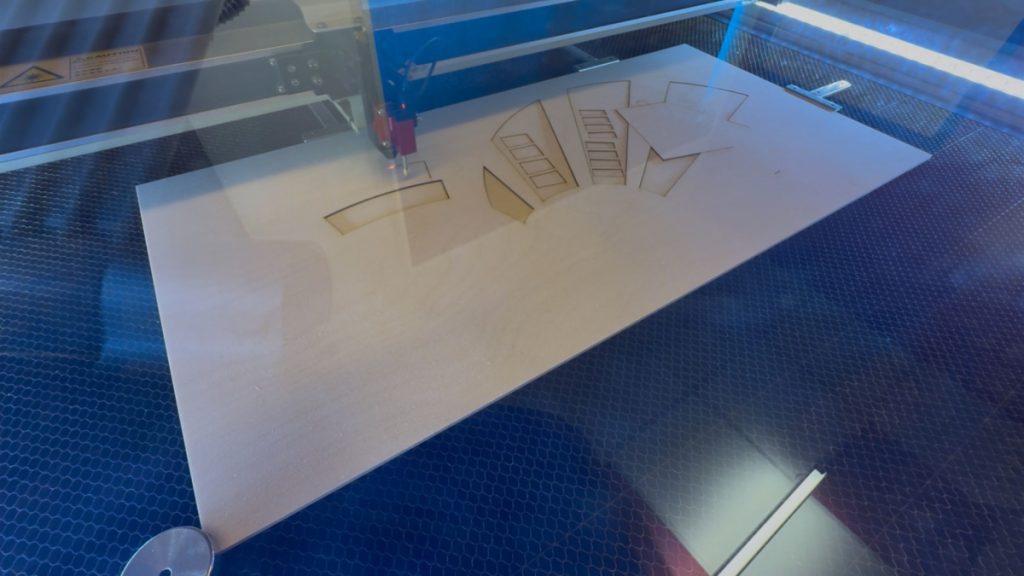
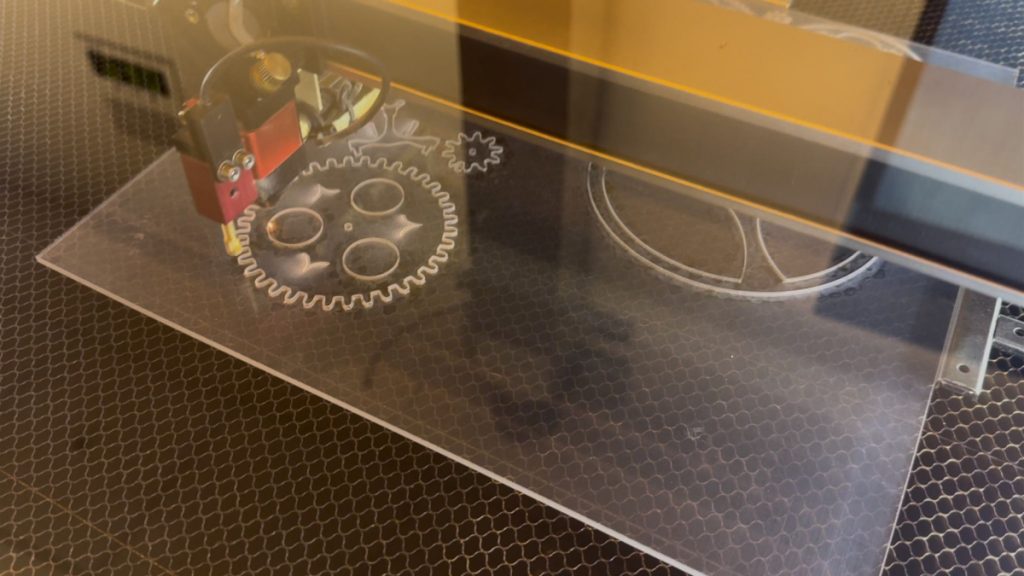
For cutting, I used our laser cutter. I used both acrylic for the mechanical parts and painted wood for the rest. I had to move all the parts into a cutting layout for space efficiency. Then I painted the wood and glued it together. I was careful with the layers to make sure it would work ahead of time, but the glue was a little flimsy.
Here is my final product! I’m proud of all the parts I incorporated together. It was a great way to cap off my year in Design.
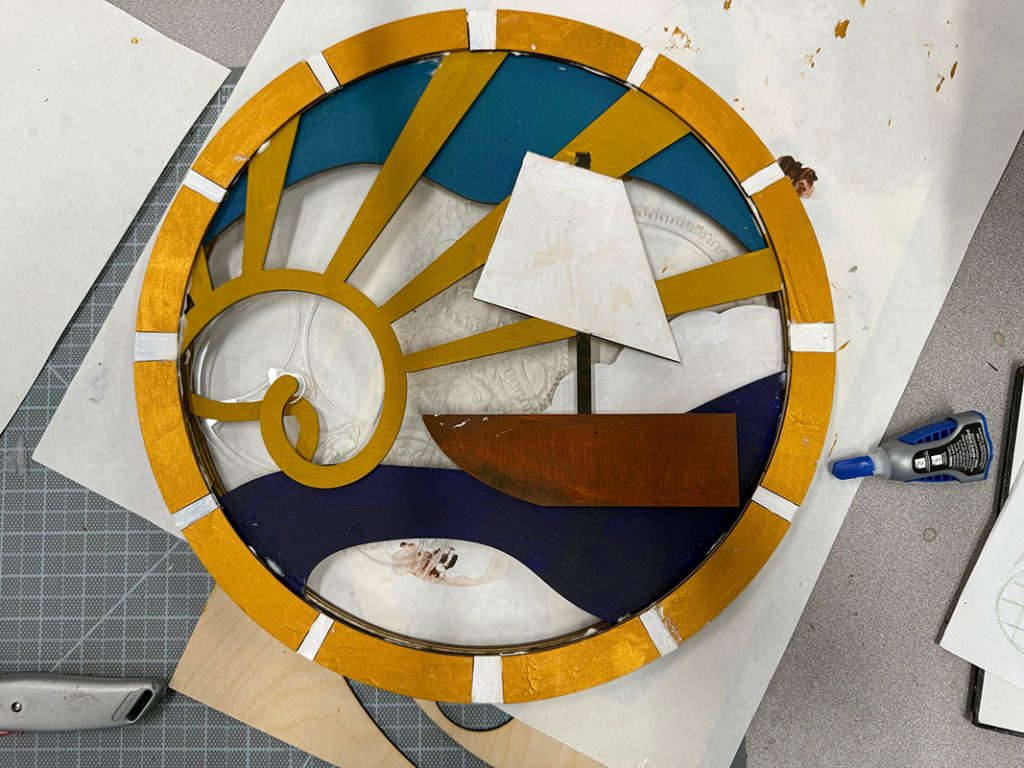
I’ve really admired analogue watches since seeing my parents wear one. I like how they are more visible than a screen in the bright sun, and can generally be made to look more conventionally beautiful. I still remember some of my first watches, even as they got too small. When I wore a fitness band, not only was it less satisfying, but I also couldn’t see the actual time in the morning. Shopping for a new watch that fit me exposed me to lots of impressive dials, so I wanted to design one of my own. Ms. Parkinson had the brilliant idea of doing a skeleton watch—one where you can see the gears inside. This gave it a technical element, and let me consider the visual balance between the inside and outside of the watch for one cohesive look. Representing how unseen the inner workings go, I made the gears and escapement mechanism from laser-cut and engraved acrylic. The case and dial were laser-cut wood. I stacked it all together to give it depth.
I can get obsessed over technicalities and details, so the inclusion of gears derailed my schedule. I made every gear different with proper diameters for the number of teeth to simulate meshable gears as best I could. As much as I tried to optimize and reuse parts, it was still a very slow process. If I could do the project over, I would immediately sacrifice the notion of getting all the gears, and immediately design the supporting structure in a way that would cover it up like I had to figure out near the end. This would save me a lot of time and worrying later on. I had to make some sacrifices, but also found creative ways of covering up all the empty parts with the wood parts of the dial. It was really satisfying to hold it in the end with the depth, and I learned so much about watches which are really cool! They’re an amazing blend of form and function, and it makes the watch I wear just even more impressive.
Presentation
We had our Zenith celebration after we were done, where I presented in front of the whole AM student body. Here is my presentation. It has some additional lovely progress photos accompanied by the even lovelier sound of my voice.
Through the research of the gears combined with the actual artistic element, I ignited my passion and stayed true to my pursuit of knowledge. Watches, which are both fashionable jewelry and precise machines, may just be the ultimate example of form and function working together. The project really connects to how I hope that in the future I’ll still be able to take style knowledge and design experience and connect that with more technical things that I also love.
The inside of a watch is usually obscured even more than what I’ve done, invisible even more than the transparent acrylic I used to make the gears. I think it’s when there is understanding of these things that aren’t immediately apparent that even greater creative potential is unlocked.
Thank you so much for sticking around!