Introduction
For my documentary, I decided to research about the effects of crochet on people with disabilities. We held personal interviews, and found other research sources to gather information.
Design Book Production
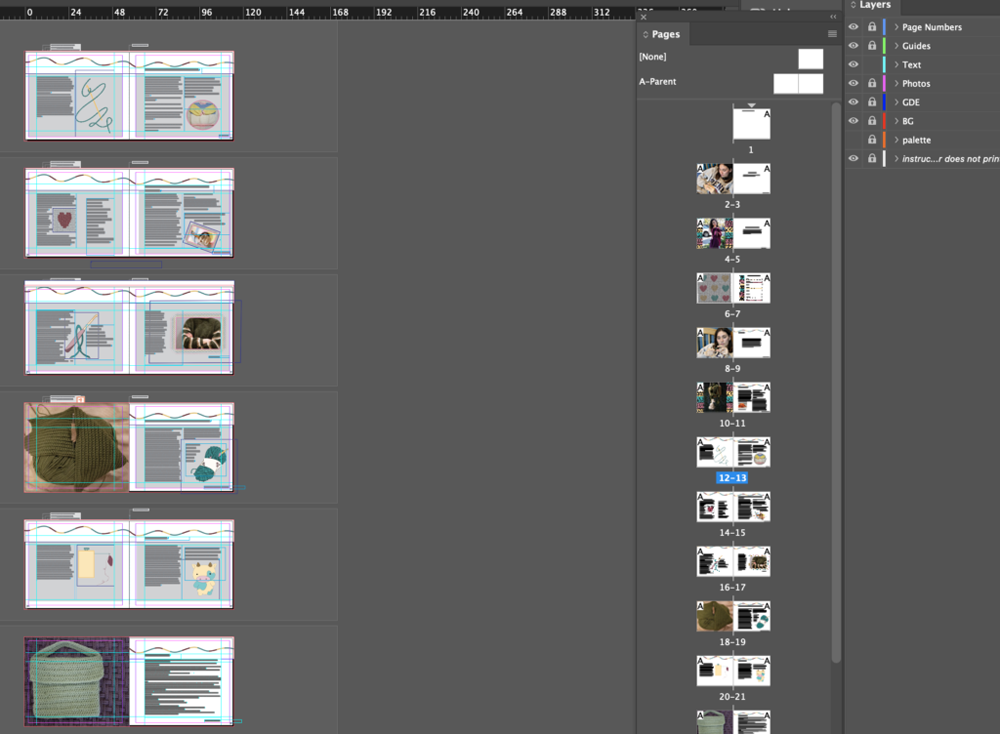
In design, we used the research paper we made in English class. We took photos and added other sections to our papers like acknowledgments, table of contents, and dedications. We used InDesign to put all of this content together.

Text
Sofa Vincent
Mr. Greco
English III
7 April 2023
Crochet
Dedication
I dedicate this book to my crochet buddies. Thank you for joining me and making creating more fun.
Acknowledgments
I would like to thank the wonderful people I interviewed. Thank you all for taking the time to help me complete this book and for sharing your experiences with me. I could not have done it without you. I would also like to thank Rikki Kapiloff for helping me take photos. Thank you to Mr. Greco as well for helping me write and revise this book.
Preface
When we started this Documentary project, our Freestyle teachers told us how difficult it would be, and this was definitely correct. In the beginning, I did not know what I wanted this book to be about. I was going through an Ehlers Danlos flare-up and was worried about taking on such a big project. However, this limitation actually led me to the topic of crochet. When I am sick or fatigued, I pick up my hook. Crocheting is an activity that requires little movement and energy which allows me to stay productive and interested during a time where I otherwise would not be able to. This has been very beneficial for me which I realized was something that I could write about.
Introduction
As you walk through the park, there on the bench sits a person crocheting. You notice the way they move their hands, pushing and pulling, interlocking the fibers. You continue walking and make one lap around. When you return, you can see how it has grown: hundreds of stitches form a single fabric. You continue walking and as you finish your second lap, they still sit there crocheting. They smile as they work, blissfully unaware of the world around them. On the road nearby, one driver honks at another, who responds by sticking his head out the open window to give a piece of his mind. Yet the crocheter doesn’t look up. Unphased, they continue working, focused and content.
While crochet may seem to be just a fun hobby at first glance, it offers many overlooked benefits. In addition to being entertaining, it can also be useful in the management of many illnesses, both mental and physical.
Chapter 1: mental health
In “Crafting for Health,” Ashley Foster asserts that crafts like crocheting and knitting have been proven useful for helping combat anxiety and depression and have been commonly used as a form of art therapy by many rehab facilities and therapists. Repetitive motions tend to have a soothing effect which makes these crafts an effective creative outlet to help manage stress.
High school student and crocheter Alessia Rella explains, “It’s repetitive, but it also takes a little bit of brain power, so you can’t just zone out,” which rings true for many other crafters. Even though it eventually becomes muscle memory, you still need to pay attention to other details which makes it a great distraction. “It was something to put your mind on and not think about all those other things that you don’t want to think about” (Rella). Setting aside a bit of time in your day for the things you enjoy is also important to avoid getting overwhelmed, which is exactly what college student Kali Goldwater does. “It makes me happy because when I have all these responsibilities, just being able to sit down and crochet is my favorite. So I wish I had more time for it because I love it,” says Goldwater.
In addition to individual use, crafts like knitting and crocheting have been used in many therapeutic settings as it has shown to be useful for the management of many mental illnesses. “Therapeutic knitting has been connected to combatting depression, anxiety, post-traumatic stress disorder, addiction, eating disorders, and chronic pain, proving that a wide variety of people could benefit from it” (“The Many Benefits of Knitting”).
Chapter 2: Chronic Pain and Illness
Child life specialist Ashley Boyd Wooten explored in her thesis the effect of textile arts on adolescents with chronic illnesses. She used knitting as a way for patients to pass time during hospitalizations. From this experiment, she concluded that it can be a “catalyst for positive emotions, relationship building, and sharing skills with others.”
In addition to its emotional benefits, crochet benefits physical health. One reason for this is the effect that stress and emotional well-being have on your body. There is a strong link between emotional and physical health. For many chronic illnesses, stress can be a cause of pain and flare-ups. This makes having good coping skills so much more important for people with conditions like these. Art therapist Kayley Nelson explains the impact of using crochet for people with chronic pain. Nelson says that art therapy should be used “as a part of a multidisciplinary approach that functions in a complementary way to individuals’ medical treatment and medications.” People with chronic pain often end up isolated and art therapy can bring a sense of community and hope that they often lack. This can help bring people into a better emotional state which can make their symptoms more manageable.
Crocheting also keeps your hands active by using repetitive motions. Occupational Therapist Cammie Larson shares the health benefits of knitting and encourages people to give it a try. Larson says that “Knitting promotes active finger and wrist movement, dexterity and fine motor coordination that can facilitate improvements in other functional skills.” In addition, it also keeps your brain active, using both sides of your brain. According to the Journal of Neuropsychiatry and Clinical Neurosciences, “craft activities, such as knitting, quilting, etc, were associated with decreased odds of having MCI[mild cognitive impairment]” (qtd. in Larson).
Crocheting is also a popular hobby for people with Ehlers Danlos Syndrome. As someone with EDS, I have extremely hypermobile joints, especially in my fingers so crochet has helped build strength and coordination in my hands. Another thing people with EDS often struggle with is proprioception, the “perception or awareness of the position and movement of the body.” People struggling with proprioception may benefit from crocheting because it requires constant attention to the movement of their hands, grip, and tension. “Our proprioceptive systems help us detect and control the pressure that we feel and exert, in a variety of daily activities. With more control, we are able to be more intentional with our movements, our interactions with others, and the way we function throughout the day,” (“Fun Proprioceptive Activities”). Chicago Occupational Therapy, an organization focused on providing individual care for children states that activities including lifting, pushing, and pulling can give proprioceptive input and bring more awareness and coordination.
Chapter 3: Harm Reduction and Accessibility
While crochet has many benefits, there are also some drawbacks. Repetitive strain injuries(RSI) describe “pain felt in muscles, nerves, and tendons caused by repetitive actions and poor posture” (“Crochet Addiction and Other Extreme Sports” ). People who crochet for extended periods often experience RSI. These can be painful, put a pause on crocheting, and can also interfere with everyday activities. “My neck hurts because I just lean over and my eyes get strained from looking at the pattern for so long,” says Goldwater. However, some things can be done to prevent these issues. Being aware of keeping proper posture and lighting and taking frequent stretch breaks can all help make sure that you are crocheting healthily, in addition to many tools that can help prevent or manage these issues. Compression gloves, for example, can help alleviate pain, and swelling, and improve circulation. This makes it easier to crochet for longer periods without discomfort. Ergonomic hooks can also have a similar effect. The way you hold a hook has a huge impact on your joints so it is really important to find a hook that you can use comfortably.
Crocheting may also be made difficult due to disabilities, although there are ways to accommodate them. Many disabled people can get or make aids to help with the issues that come up. Many people with EDS use aids called ring splints. These reduce your hands to a normal range of motion to prevent hyperextension, which often occurs when holding things like pencils or crochet hooks. Crochet content creator Hellen Zhou gives another example of the accommodations you can make to be able to crochet. She had a stroke nine years prior to her first attempt and lost the use of her right hand. When she found a video online of how to make a DIY aid, Zhou and her parents learned. “My mom and dad had other plans to make it better. They’re actually engineers, mostly joking, but they thought of some really cool ways to make my adaptive crochet aid” (Zhou). Since then, she has become an influencer who shows people that you actually can crochet with one hand and possibly inspire people in similar situations to try the same.
Conclusion
In conclusion, crocheting can be useful to help manage illnesses, stress, and pain, as well as stress from everyday life. If these benefits aren’t reason enough, crochet is also a very entertaining hobby. “My favorite part is being able to make things that I would buy for a lot of money because people can charge like $100. For example, clothes, cardigans, blankets, stuffed animals, and room decor. I love being able to make it myself, knowing that if I saw it in a store, I would be obsessed with it too,” says Goldwater. Like every hobby, it can have a bit of a learning curve. But once you get the hang of it, it can be very enjoyable. “Everyone should learn to crochet. It is so much fun. It’s therapeutic. It’s mesmerizing. I didn’t give up and it just felt so rewarding being able to overcome that challenge and feeling proud of myself” (Goldwater).
Reflection
This documentary project was definitely the most difficult thing I have done at freestyle so far. Between organizing interviews, writing the paper, and designing the book, it was a ton of work. This was also not helped by the constant struggle to load anything on InDesign(It crashed and deleted lots of work, despite being saved multiple times). However, now that this project is done, I am happy to have a finished book that I can look back on and be proud of.
Thank you
I would like to thank Kali Goldwater, Tamar Hazon, and Alessia Rella for helping me doing these interviews with me. I couldn’t have written this paper without them. Also thank you to Mr. Greco and Ms. Parkinson who helped me revise and create this book. You are all amazing.