Introduction
For the Junior Documentary Project, we learned to portray a subject of our choice in a journalistic written format, involving primary and secondary research sources and developing a theme to illustrate our subject’s significance in the world. The project centers around the research-based paper in English which we used to design a magazine in Digital Media, and a documentary book for my Design class. The headline for my documentary project is Mother Cow, and the deck is, “Sri Krishna Balaram Goshala in Milpitas California is helping people meaningfully connect to animals and themselves.” For my article, I wrote about the work and services of a Bay Area goshala, the sanskrit word for cow sanctuary, as well as the cultural significance of the goshala for animals and the greater community. My interest for this subject sparked from my interests in cultural preservation and wellness, and I focused my research and interviews on trying to understand why an ancient animal-welfare practice of a sanctuary important in a modern society. Throughout the process, themes of compassion, community wellness, and connection emerged.
During this project, I valued being able to improve my journalistic writing skills to create a long-form narrative driven article, while also improving my layout and digital art skills to convey messages and information through visuals. Being able to concentrate my writing into the visual magazine article and ultimately my book was a challenging yet meaningful experience, teaching me to problem solve with different Adobe applications, have patience, and also deepen my ability to plan, layout, and design.
Research Paper

With the Documentary Project, I stepped into my role as a journalist, but this time, guided by my own terms and not as a staff member of a newspaper. This was both liberating and overwhelming, as I had the creative freedom to guide my own artistic direction but also had to manage the weight of a new project. In Documentary writing, I brought attention to storytelling into the real world by researching and analyzing the connection between a goshala – or cow sanctuary – in Milpitas and community service, while using descriptive and observant storytelling techniques and research to communicate my angle in an immersive format. I had to “peel away” the layers of my documentary subject to reveal themes that I could analyze and connect to my research. During each of my interviews, I found that this process of “uncovering” came naturally through the flow of conversations. Through interacting in conversation, my interviewees and I formed connections, new experiences, and the exchange of ideas, all of which brought an intimate quality of writing to my article. In my research, I connected scientific and historical facts about goshalas while corroborating the information I found with what my interviewees had told me during our meetings. It is this intersection of research and human connection that journalism blends together so beautifully. For example, the documentary project invited us to be curious and ask thoughtful questions while also using literary devices of organization and engagement to structure our multi-page articles. All at once, I had many roles during this project — student, community member, researcher, and documentarian, which helped me understand how writing can impact one in a variety of personal ways.
Magazine Article

Documentary Book
The documentary book was one of the most challenging projects in my junior year. For this project, we formatted our article into chapters, gathered photos, planned a color scheme, made original graphic design elements, and put all these elements together to culminate into a 30+ page book. My book is titled, Mother Cow and incorporates original artwork inspired by Indian tribal art and photographs of the goshala I researched. Every late night spend editing, drawing, and organizing was so worth it when I finally held my physical book in my hands.
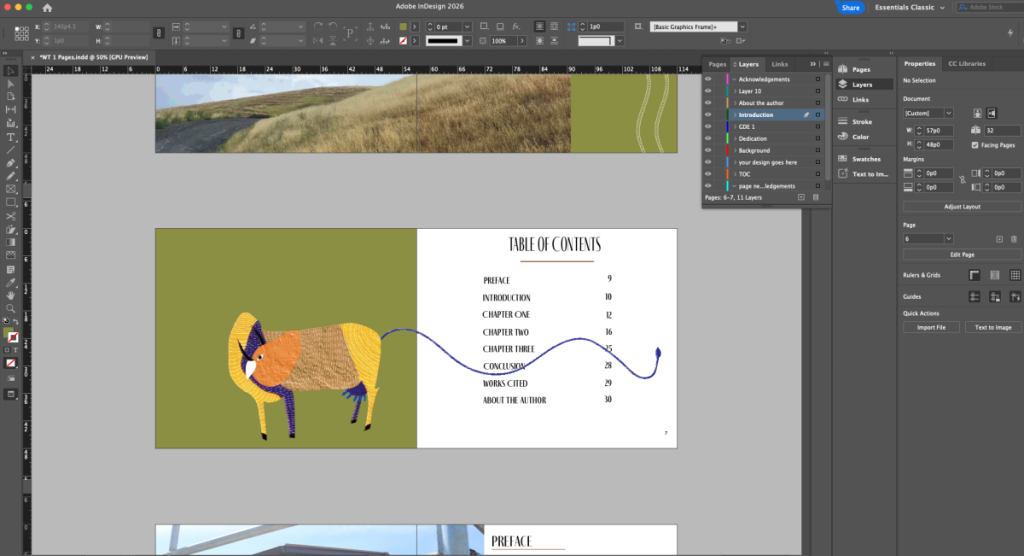
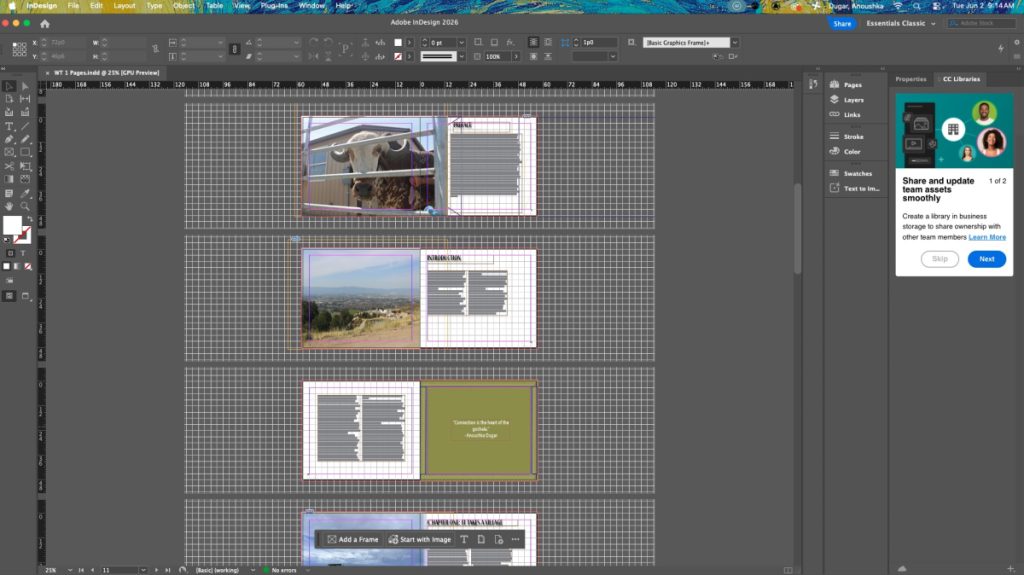
The Book Process, in Photos
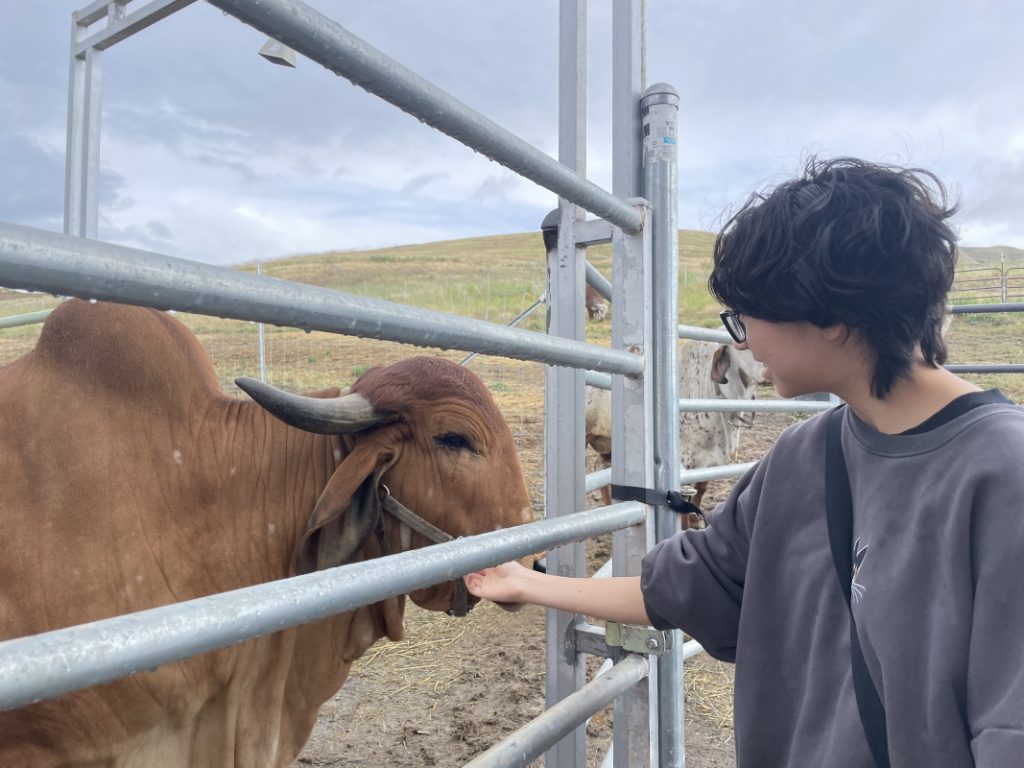
I chose to use earth tones of green, yellow, and a rich blue as my color palette throughout the book. Additionally, I used Adobe Illustrator to create my graphic design elements of different illustrations of cows. The illustrations are inspired by the Gond tribal art style of India which incorporates the natural world into art. I also created wavy, leaf-like borders to further tie the nature into my design and a repeated design to my pages for a cohesive feeling. For my photographs, I focused on depicting the cows in various settings and lights as well and the rolling hills and fields to showcase the pasture settings and feeling of the cow sanctuary.





Interviewees

Ram Nam Das (left) is the head manager of Sri Krishna Balaram Goshala and was my star interviewee. I am immensely grateful for the extensive information he provided me on the the goshala as well as the cultural and communal significance of the work he does. It was a pleasure to learn more about this amazing place from him. I would also like to extend my gratitude to my other interviewees, Smitra Raghevendra and Ram Mallela who provided their thoughtful insights as volunteers at the goshala, this book wouldn’t have been possible without them.
Acknowledgements
This book wouldn’t have been possible without the support from so many people. Thank you to my parents and family for driving me back and forth to the goshala and giving me new ideas for my research and book design. I would also like to thank my Design teacher Ms.P and my English teacher Mr.Greco for all of the detailed feedback and guidance they provided me on my writing, layout, and book design. Furthermore, I would like to thank all my Design classmates for their feedback and ideas for my book. Next, I would also like to thank all of my interviewees for the time and kind conversations they provided me to learn more about the goshala. Finally, I would like to thank the cows for teaching me more than I could imagine.